
Article: From Resin to Wrist

From Resin to Wrist
The bazaars of Hyderabad are a world of color and rhythm—the soft clink of bangles, the flash of mirrored stones, the glow of reds, greens, and golds stacked in endless rows. Stalls spill over with shimmering designs of bangles, and it’s hard to leave without trying on a set or two. Lac bangles, with their glossy finish and intricate detailing, remain among the most popular purchases.
At the heart of these bangles is lac, a natural resin produced by lac insects and used in decorative crafts for centuries. The practice is believed to have originated in Rajasthan in the 17th century and gained prominence during the Mughal period, with figures like Mumtaz Mahal associated with its popularity. In Hyderabad, lac bangle-making dates back to the Qutub Shahi era, shaped by Persian influences and gradually evolving into a localized craft tradition that continues today (Dr Salma Farooqui, MANNU).
Production today is spread across small workshops and homes. In neighborhoods like Talabakatta, thousands of women contribute to different stages of the process, especially stone-setting and finishing. It is detailed work: placing each stone, aligning each pattern, and ensuring every piece matches the intended design.
It is within this broader system of production that two distinct methods of making lac bangles have developed—garam lac and thandi lac—each reflecting different approaches to material, skill, and scale.
Garam Lac Bangles: Traditional Production
The garam lac method uses natural resin and requires a high level of skill. Lac is harvested, processed, and mixed with marble powder to form a workable material. This is shaped into cylinders, heated, and applied onto metal rings, which are then molded using wooden tools to achieve the final form. While the surface is still warm, each stone is placed by hand, one at a time.
The shaping, reheating, and detailing all require precision and experience, with the result being a bangle with a distinct finish and weight. Due to the precision and time involved, a skilled artisan typically produces one set per day.
Thandi Lac Bangles: Responding to Market Demand
Alongside this, thandi lac has emerged as a faster alternative. Using synthetic resin and hardeners, artisans create a putty that can be rolled directly onto a base bangle. Stones are added later, often in a separate step. The process is easier to learn, less physically demanding, and significantly quicker, allowing multiple sets to be completed in a single day.
This shift is closely tied to how the market has evolved. Today’s buyers often look for affordable, uniform designs that are available quickly, especially for weddings, festivals, or bulk purchases. Retailers, in turn, need faster production cycles and the ability to fulfill large orders without delays. Thandi lac meets these needs efficiently: it lowers costs, speeds up production, and delivers a product that looks very similar to traditional garam lac.
At the same time, this shift changes how the craft is practiced. While thandi lac opens up more opportunities for income, it reduces dependence on the specialized skills required for garam lac. As production becomes faster and more standardized, traditional techniques are used less frequently, and the role of highly skilled artisans becomes more limited within the overall process.
Kritikala: Design, Production, and Livelihoods
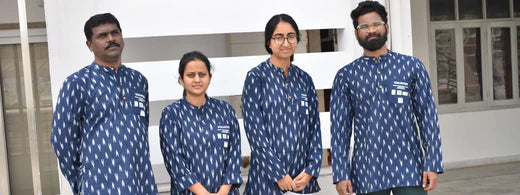
Kritikala is a women-led enterprise working with artisans from low-income communities in Hyderabad, particularly in Talabakatta. It focuses on producing lac bangles that are accessible, well-designed, and aligned with evolving market preferences, while ensuring consistent income opportunities for women artisans.
Kritikala places a strong emphasis on garam lac production, actively supporting and sustaining traditional techniques that require higher levels of skill and craftsmanship. This approach not only helps preserve established methods but also results in bangles of superior quality in terms of finish, durability, and overall design.
The organization works across the value chain, coordinating production, supporting artisans, and introducing design inputs that respond to changing consumer demand. By integrating modern design sensibilities with traditional methods, the products remain relevant to evolving consumer preferences while retaining their core craftsmanship. At the same time, the production model supports home-based work, enabling women to participate in income generation alongside other responsibilities.
By linking artisans directly to markets, Kritikala strengthens both production systems and livelihoods. The focus remains on sustaining employment, improving product quality, and ensuring that traditional craft practices continue to adapt within today’s economy. Through their craftsmanship and evolving designs, Kritikala’s women artisans are creating their own vibrant bazaar: one filled with distinctive, hand-finished bangles that catch the light, echo the rhythm of the markets, and bring that experience to new spaces.

Leave a comment
This site is protected by hCaptcha and the hCaptcha Privacy Policy and Terms of Service apply.